

You’d be Surprised how Crowdfunding and State Interventions are Tackling ‘Lunch Shaming’
Charity is in, for the holiday season, in 2018, sending clothes for the poor and donating food to soup kitchens, repaying student’s lunch debt, an acute problem in American schools, is increasing. To eat school cafeteria lunches, students must enroll in government subsidized, reduced or free lunch programs, and they also need to have some minimum amount of money in their meal accounts. If families do not pay upfront, students accrue lunch debts or are denied meals. A few schools give their wards some grace period, permitting them to eat lunch for several weeks (or days) before curbing lunch. Some schools have denied lunches to students with overdrawn accounts.

According to a non profit which represents those who provide school lunches, School Nutrition Association, 75% of all school districts nationally had unsettled meal debts in the 2016-17 school year and a 4% point increase over the analyzed meal debt for the 2012-13 school year. Concerned citizens, alarmed at the widespread problem of children with meal debts remaining hungry during the day, have been paying off this debt. Recently, 25 staff members from Wisconsin’s Madison Metropolitan School District had to fundraise $25,000 to repay overdue lunch bills of students.

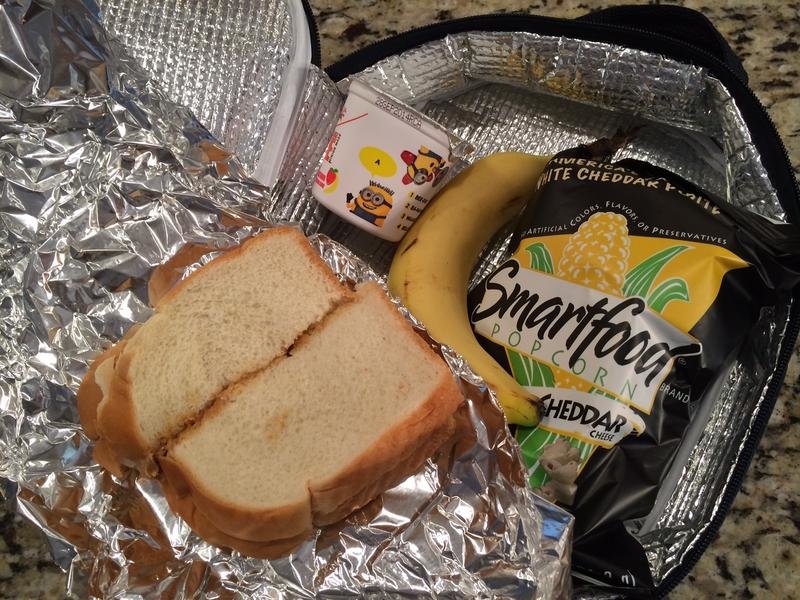
A Lions Club in Minnesota gave $2000 and in Michigan, a kindhearted anonymous donor gave $ 7200 to specific schools to repay student lunch debts. Even students such as Florida 5th grader Arman Shah, managed to raise $100 to pay for other students’ lunch debt at an Orange County school after seeing a film on “lunch shaming,” a practice wherein students who do not have funds in their school meal accounts are not given lunch, sent home with hands stamped with ‘I Need Lunch Money!’ to remind parents to settle dues or were even served cold sandwiches while other students get hot food. In some instances, cafeteria workers have disposed off meals ordered by students with negative balances.
Students at Risk
This shaming may be inescapable as in 2017, the US Agriculture Department authorized school districts to introduce policies for settling student lunch debts and inform parents about zero or negative accounts when the school year begins, thus avoiding the humiliation of these kids during lunch. But some districts make use of punitive means to deal with delinquent meal accounts. Rhode Island’s Cranston School District began using the services of Transworld Systems, a collection agency to recover student lunch debt. Cranston schools’ total in unpaid lunch debt is a staggering $45,859 and they had to write off about $95,000 between September of 2016, to June of 2018 and confirmed hiring a collection agency as the district lunch program cannot afford to lose any more revenue. Students with unpaid lunch debts, however, would still be served food.
As Cranston dispatches debt collectors, states like New Mexico passed legislation to prohibit lunch shaming completely. Crowdfunding campaigns adopt a more grassroots attitude towards this issue. But as long as the larger economic issues such as the lack of inexpensive housing, food insecurity and unemployment remain national concerns, student lunch debts will persist.
The National School Lunch Program started by the Agriculture Department shields the neediest children from the harm of lunch shaming as kids eat for free if their family (consisting of 4 individuals) earns less than $32,000 a year and at discounted rates if their annual earnings are below $45,000. Households with even a slightly higher income than the cut off range are likely to struggle. About 6% of districts do not allow the children with unpaid lunch bills to eat there, as states a 2014 federal report, while 39% refuse to give these kids a warm meal, providing them instead with sandwiches or snacks which do not meet nutritional standards.
Tackling issues of overdue student lunch debts
New Mexico passed in 2017, the Hunger-Free Students’ Bill of Rights, requiring schools to assist lower income households to apply for free lunches or even register eligible students automatically besides mandating schools to contact the households with outstanding balances and also prevent schools from making students work off their lunch school debt by cleaning the cafeteria. Further, it requires schools to provide healthful meals to all children including those falling behind on their payments. Some Public Schools turned away students without enough cash to cover their lunch expenses. Other states must follow New Mexico’s example.

Texas and California have addressed lunch debt issues without shaming or depriving students. Texas passed a bill which awards a grace period to students with negative balances and are not get turned away at the lunch line. School districts now provide all students the same meals irrespective of their lunch debts. The law there mandates that schools must help families know and apply for the reduced or free lunche programs and inform the families with overdue accounts if the lunch money has not be paid for more than 10 days. Debt collectors are not involved in this process.
Crowdfunding campaigns to erase student lunch debt enable concerned citizens to address issues, but some states prevent students from being humiliated in cafeterias or deprived of nutritious meal. Structural changes to address the student meal debt issues evenly, taking into account issues of both students and the struggling caretakers, are needed.
More in Crowd Funding
-
`
 Bear Grylls Teaches the Ultra-Wealthy How to Survive the Apocalypse at Luxury Resort
At Sani Resort on Greece’s Kassandra Peninsula, something strange is happening. Guests step out of private-pool suites, hand over their phones,...
January 24, 2026 -
`
 Households are Ditching Fixed Deposits and Pouring Billions into Stocks and Mutual Funds, Data
Something big is happening to how Indian households save and invest. The comfort of fixed deposits, small savings schemes, and insurance-backed...
January 17, 2026 -
`
 Retirement Reality Check for 55-64 Year Olds Reveals Serious Savings Gap
If retirement feels close and uncomfortable, you are not imagining it. For Americans between 55 and 64, the numbers paint a...
January 11, 2026 -
`
 How the BON Luxury Theme Park Will Revolutionize the Industry in 2026
Theme parks typically mean long lines, loud walkways, and a full day of rushing from one ride to the next. That...
January 1, 2026 -
`
 Karen Read’s Civil Lawsuit Leads to Counter-Fundraiser by Accused Conspirators
Karen Read’s name refuses to fade from the headlines. Just months after a jury cleared her of murder and manslaughter, she...
December 26, 2025 -
`
 How Bank Impersonation Scams Are Stealing Hundreds of Millions of Dollars Every Year
The FBI has raised serious concerns about a bank impersonation scam that is accelerating faster than expected. Investigators report that fraudsters...
December 18, 2025 -
`
 How to Simplify Your Financial Planning With an SIP Calculator
Planning for the future becomes easier when you can see how each decision adds up. An SIP calculator offers that perspective...
December 13, 2025 -
`
 The Greatest Wealth Transfer Is Making Gen X the Final Boss of Luxury
Gen X has spent years watching louder generations grab headlines. Now the spotlight has shifted. A massive wave of inherited wealth...
December 5, 2025 -
`
 Most Crowdfunding Campaigns Fail to Meet Cancer Costs, New Study Shows
Crowdfunding has become a common lifeline for people facing crushing cancer bills. It feels like the only option when savings drain...
November 28, 2025
More From Refinance Gold
-
 Star Citizen Surpasses Historic $1 Billion in Crowdfunding After 14 Years
Star Citizen has achieved something no video game has ever done before. After more than 14 years of development and continuous...
Crowd FundingJune 12, 2026 -
 Everything to Know About California Inheritance Tax and Proposition 19 in 2026
Many Californians hear the words “inheritance tax” and immediately worry about a large tax bill. The good news is that California...
Top Bank AccountsJune 7, 2026 -
 The Triple Tax Advantage Most People Ignore for Healthcare in Retirement
Most people treat their 401(k) like the star player of retirement planning. They put money in every month, hope the market...
Investments & SavingsMay 31, 2026 -
 Young Couple’s Love for Thai Hotels Turns Their Two-bedroom Condo Into Quiet Luxury & Warm Minimalism
Most people return from a luxury hotel with photos and souvenirs. One young Singapore couple came home with a completely new...
Luxury & Life StyleMay 24, 2026 -
 New Crowdfunding Campaign Aims to Bring ‘Reliable Ice’ Back to Escanaba
Escanaba residents could soon see the return of outdoor skating at Ludington Park, and this time, warm winters will not get...
Crowd FundingMay 17, 2026
You must be logged in to post a comment Login