
Why Genki’s Crowdfunded Genki Manta Is Its “Most Ambitious Product” Ever
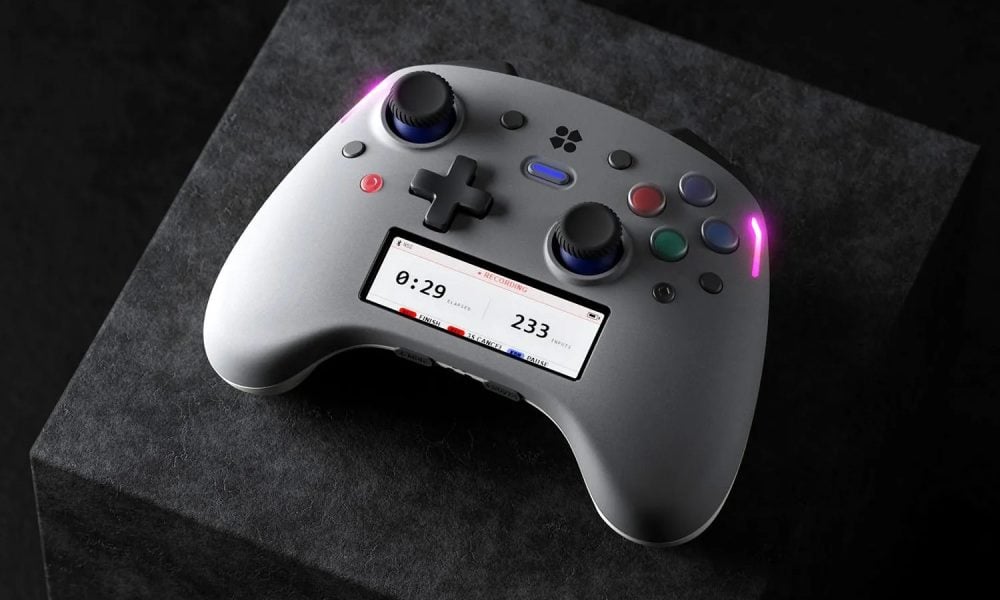
Genki is taking a much bigger swing at gaming hardware with the Genki Manta, a feature-packed pro controller now seeking funding through Kickstarter. The company calls it its “most ambitious product” ever built, and that description makes sense once you look past the familiar gamepad shape. Genki has packed a screen, its own operating system, adjustable controls, powerful haptics, and extensive configuration tools into one device.
The Manta enters a crowded premium controller market where small improvements rarely attract much attention. Genki is trying something different by turning the controller itself into the control center for its advanced features. Players can adjust major settings without constantly reaching for a phone or opening configuration software on their computer.
Genki Manta Puts Its Settings Right on the Controller

IGN / The most noticeable feature is the large color LCD screen built into the lower section of the Genki Manta. The display measures roughly 2.8 inches and acts as more than a simple status panel.
It gives players direct access to settings that other premium controllers often place inside companion apps or desktop programs.
Genki calls the software behind this interface MantaOS. A dedicated Raspberry Pi RP2350 microcontroller powers the system, allowing the controller to handle configuration separately from the connected gaming device. Players can switch profiles, remap buttons, change thumbstick sensitivity, adjust dead zones, manage wireless connections, and alter other settings directly from the Manta.
Macro editing also gets a more visual treatment than the button combinations found on many controllers. MantaOS includes a timeline interface that lets players create and adjust macros from the built-in screen. That could make complex configurations easier to understand because users can see how their programmed inputs are arranged instead of working through a less intuitive list of commands.
Genki is also opening MantaOS to developers and enthusiasts who want to take customization further. Genki Forge serves as an open developer hub where users can create custom applications and themes. That gives the controller room to gain new functions after launch instead of locking buyers into the features available on day one.
The built-in screen also changes how players can use profiles during actual gaming sessions. Someone moving from a racing game to a competitive shooter could quickly change settings without leaving the couch. That sounds like a small convenience, but frequent profile switching can become annoying when every adjustment requires another device.
Adjustable TMR Sticks, 8,000Hz Polling & More

E Online! / Genki has added an instant keyboard and mouse mode aimed at people who connect gaming PCs to televisions. A dedicated button lets the Manta control the mouse cursor and interact with on-screen keyboards.
Its TMR joysticks use magnetic sensing technology designed to resist the stick drift that can develop in traditional potentiometer-based designs. For an expensive controller expected to handle heavy use, improved durability could matter as much as flashy software.
Players can also change thumbstick tension without opening the controller or using a separate tool. Genki’s twist-based adjustment system allows resistance to move between 30gf and 80gf. Lower resistance can support quick movements, while higher tension may suit players who want firmer and more deliberate stick control.
The triggers offer another level of physical adjustment through three selectable stages. Players can choose a digital click for fast inputs, a short travel setting for quicker analogue response, or full analogue movement. Racing players can keep precise throttle control, while action and competitive players can select a shorter response.
Genki says the Manta can reach an 8,000Hz polling rate through a wired USB-C connection. Wireless operation lowers that figure to 1,000Hz, which still gives the controller a fast communication rate for players concerned about input latency.
The Manta uses independently driven maglev haptics with linear magnetic ram motors. The system aims to send more precise physical feedback into each palm, potentially giving game effects a sharper and more controlled feeling than basic rumble motors can provide.
Six extra programmable buttons add another layer of control for players who need quick access to commands. These buttons could prove useful in shooters, action games, emulators, and PC titles with more inputs than a traditional controller comfortably handles. Combined with MantaOS, they give users plenty of room to build game-specific layouts.
More in Crowd Funding
-
`
 Russian Billionaires Wealth Surge Despite Sanctions, New Analysis Shows
Sanctions were meant to squeeze Russia’s elite, but the latest numbers tell a different story. According to Forbes Russia, the total...
May 10, 2026 -
`
 Americans Plan to Save Their 2026 Tax Refunds, but Most Will Stash the Cash in Low-Interest Accounts: Report
Americans are walking into the 2026 tax season with a clear goal. They want to save more money, and they see...
May 1, 2026 -
`
 “Time is the Real Flex,” and ‘Luxury Wellness’ Means Slowing Down on Purpose, Says Jonathan Boynton
The idea of luxury has changed, and Jonathan Boynton-Lee is calling it out in plain terms. In a recent interview with...
April 25, 2026 -
`
 The Decline of Startup Funding. What’s Driving It?
The Regulation Crowdfunding market just hit a rough patch, and the numbers tell a clear story. In Q1 2026, total capital...
April 19, 2026 -
`
 Wealthy Elites are Going Big to Help “De-extinct” Wildlife
For most of the 20th century, conservation followed a familiar path. Governments led the charge, backed by treaties and public funding....
April 12, 2026 -
`
 Having No Savings Is Actually More Dangerous Than Carrying Debt, Here’s Why
Most people assume debt is the worst financial position to be in. That belief feels logical because debt comes with interest,...
April 5, 2026 -
`
 5 Practical Ways to Verify GoFundMe Legitimacy
Online fundraisers help people during medical emergencies, disasters, and personal crises. Millions of donors give money every year through GoFundMe because...
March 25, 2026 -
`
 Indian Tycoon Nirmal Jain Places His Biggest Bet on the Country’s Wealth Management Boom
India’s wealth market is heating up, and billionaire investor Nirmal Jain wants a bigger share of it. The founder of IIFL...
March 19, 2026 -
`
 Alphabet Secures $20 Billion in Debt With Rare 100-Year Bond to Fund AI Infrastructure
Alphabet just made a bold financial move that caught the attention of Wall Street and the tech industry. Google’s parent company...
March 11, 2026
More From Refinance Gold
-
 Prada Just Opened an 8-Floor Milan Wonderland With a Secret Underground Passage
Prada has turned its historic Milan home into something much bigger than a luxury store. The newly opened Prada Galleria stretches across...
Luxury & Life StyleOctober 10, 2026 -
 Can ‘Average’ Millennials Retire As Millionaires?
A million-dollar retirement account can sound wildly ambitious when your current 401(k) balance has only five digits. For many millennials, though,...
Top Bank AccountsSeptember 26, 2026 -
 Why the New Generation of Renters Is Ditching Homeownership and Investing in the Stock Market
For generations, buying a home marked a major step toward financial security in America. Younger Americans are starting to question that...
Investments & SavingsSeptember 19, 2026 -
 This Rare, Two-Home Oceanfront Estate in Maui Hits the Market for $45 Million
Finding a private oceanfront home on Maui already takes serious money and patience. Finding two neighboring homes that form one sprawling...
Luxury & Life StyleSeptember 12, 2026 -
 Why Genki’s Crowdfunded Genki Manta Is Its “Most Ambitious Product” Ever
Genki is taking a much bigger swing at gaming hardware with the Genki Manta, a feature-packed pro controller now seeking funding...
Crowd FundingSeptember 4, 2026
You must be logged in to post a comment Login