

The Rise and Fall of “All Or Nothing,” Tumblr’s Most Infamous Crowdfunding Story
The internet has a way of turning small ideas into massive movements overnight. Sometimes those stories end in success. Other times, they become lasting lessons about ambition, inexperience, and the challenges of bringing online dreams into the real world.
Few stories capture that better than “All Or Nothing.” What started as a funny Tumblr post in 2014 grew into one of the platform’s biggest collaborative projects before ending in controversy. More than a decade later, people still mention it whenever questionable crowdfunding campaigns appear online.
The story remains one of Tumblr’s most memorable moments because it mixed creativity, community, and disappointment in equal measure. It also showed how quickly excitement can outpace careful planning.
A Joke That Became a Community Project

Tim / Pexels / The story began on February 19, 2014, when Tumblr user discontentramblings shared a lighthearted idea for a sitcom.
The concept centered on two roommates, one asexual and one pansexual. The title, “All Or Nothing,” cleverly reflected the contrast between the two identities.
The idea immediately connected with Tumblr users. Another creator, everythingisnightvale, expanded the concept by adding personality traits that challenged common stereotypes. Instead of presenting the pansexual character as overly flirtatious and the asexual character as quiet or withdrawn, the proposed sitcom reversed those expectations.
The project quickly became collaborative. Artists created fan illustrations. Writers imagined storylines. Others developed supporting characters and expanded the fictional world. What started as a simple joke slowly transformed into a shared creative universe built by hundreds of enthusiastic Tumblr users.
Crowdfunding Turned Fiction Into Reality
As excitement continued to grow, some fans wondered if “All Or Nothing” could become a real web series instead of remaining an online concept. That opportunity appeared on June 16, 2014, when teenager Kaye Abernathy, known on Tumblr as kitkatpaddywak, launched an Indiegogo campaign to fund production. The initial fundraising goal was only $600, a modest amount intended to help start development.
Supporters responded almost immediately. The campaign quickly exceeded its original goal and eventually raised nearly $6,000. Many backers were motivated by more than simple curiosity. They genuinely wanted to support independent LGBTQ+ storytelling during a time when authentic representation remained uncommon in mainstream entertainment.
The campaign reflected the optimism of early crowdfunding. Many internet users believed creative projects could bypass traditional studios by relying directly on passionate communities. Success stories from platforms like Kickstarter and Indiegogo encouraged that belief.
Problems Started to Surface

Magnific / Backers wanted details about scripts, filming schedules, equipment, locations, casting, and budgeting. Those questions revealed serious gaps in the project’s planning.
Public responses from the official “All Or Nothing” account suggested that many basic production decisions had not yet been finalized.
Critics also pointed out another major problem. Even though nearly $6,000 sounded impressive compared to the original goal, it remained far below the actual cost of producing a scripted web series.
Independent productions require cameras, sound equipment, lighting, editing software, locations, insurance, transportation, costumes, and numerous other expenses. Experienced filmmakers noted that the available budget simply could not support the project’s ambitions.
Updates gradually became less frequent. Communication slowed, then eventually stopped. Months passed without meaningful progress, leaving many supporters frustrated and confused.
The silence became almost as damaging as the lack of production itself. Backers wanted transparency, but they received very little information about what had happened.
More in Crowd Funding
-
`
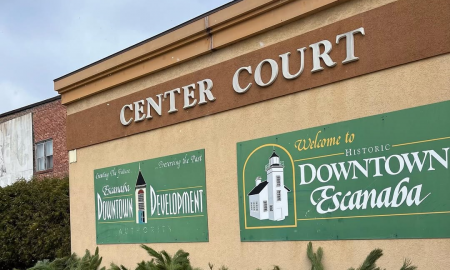 New Crowdfunding Campaign Aims to Bring ‘Reliable Ice’ Back to Escanaba
Escanaba residents could soon see the return of outdoor skating at Ludington Park, and this time, warm winters will not get...
May 17, 2026 -
`
 Russian Billionaires Wealth Surge Despite Sanctions, New Analysis Shows
Sanctions were meant to squeeze Russia’s elite, but the latest numbers tell a different story. According to Forbes Russia, the total...
May 10, 2026 -
`
 Americans Plan to Save Their 2026 Tax Refunds, but Most Will Stash the Cash in Low-Interest Accounts: Report
Americans are walking into the 2026 tax season with a clear goal. They want to save more money, and they see...
May 1, 2026 -
`
 “Time is the Real Flex,” and ‘Luxury Wellness’ Means Slowing Down on Purpose, Says Jonathan Boynton
The idea of luxury has changed, and Jonathan Boynton-Lee is calling it out in plain terms. In a recent interview with...
April 25, 2026 -
`
 The Decline of Startup Funding. What’s Driving It?
The Regulation Crowdfunding market just hit a rough patch, and the numbers tell a clear story. In Q1 2026, total capital...
April 19, 2026 -
`
 Wealthy Elites are Going Big to Help “De-extinct” Wildlife
For most of the 20th century, conservation followed a familiar path. Governments led the charge, backed by treaties and public funding....
April 12, 2026 -
`
 Having No Savings Is Actually More Dangerous Than Carrying Debt, Here’s Why
Most people assume debt is the worst financial position to be in. That belief feels logical because debt comes with interest,...
April 5, 2026 -
`
 5 Practical Ways to Verify GoFundMe Legitimacy
Online fundraisers help people during medical emergencies, disasters, and personal crises. Millions of donors give money every year through GoFundMe because...
March 25, 2026 -
`
 Indian Tycoon Nirmal Jain Places His Biggest Bet on the Country’s Wealth Management Boom
India’s wealth market is heating up, and billionaire investor Nirmal Jain wants a bigger share of it. The founder of IIFL...
March 19, 2026
More From Refinance Gold
-
 Wife Films Husband Answering Money Questions and Netizens Love It!
Finance videos on social media usually follow a familiar formula. There are charts, dramatic warnings, expensive microphones, bold claims, and creators...
Investments & SavingsOctober 16, 2026 -
 Prada Just Opened an 8-Floor Milan Wonderland With a Secret Underground Passage
Prada has turned its historic Milan home into something much bigger than a luxury store. The newly opened Prada Galleria stretches across...
Luxury & Life StyleOctober 10, 2026 -
 Can ‘Average’ Millennials Retire As Millionaires?
A million-dollar retirement account can sound wildly ambitious when your current 401(k) balance has only five digits. For many millennials, though,...
Top Bank AccountsSeptember 26, 2026 -
 Why the New Generation of Renters Is Ditching Homeownership and Investing in the Stock Market
For generations, buying a home marked a major step toward financial security in America. Younger Americans are starting to question that...
Investments & SavingsSeptember 19, 2026 -
 This Rare, Two-Home Oceanfront Estate in Maui Hits the Market for $45 Million
Finding a private oceanfront home on Maui already takes serious money and patience. Finding two neighboring homes that form one sprawling...
Luxury & Life StyleSeptember 12, 2026
You must be logged in to post a comment Login